
Plant pumpkins during Summer or Autumn and allow eight full growth days before the relevant season window closes. The captured item and farming records agree on those two seasons and the eight-day grow time. They do not establish one universal “last day” without also confirming how the current build counts planting day, watering, calendar rollover, and the end of the player's current season.
The safe answer is therefore practical: plant as soon as Pumpkin Seeds become available, keep the plot watered, and reserve at least eight remaining growth days. If only the minimum window remains, plant one test seed first or wait for the next valid season rather than risking the whole stack on an assumed calendar calculation.
Pumpkin seed unlock and planting seasons
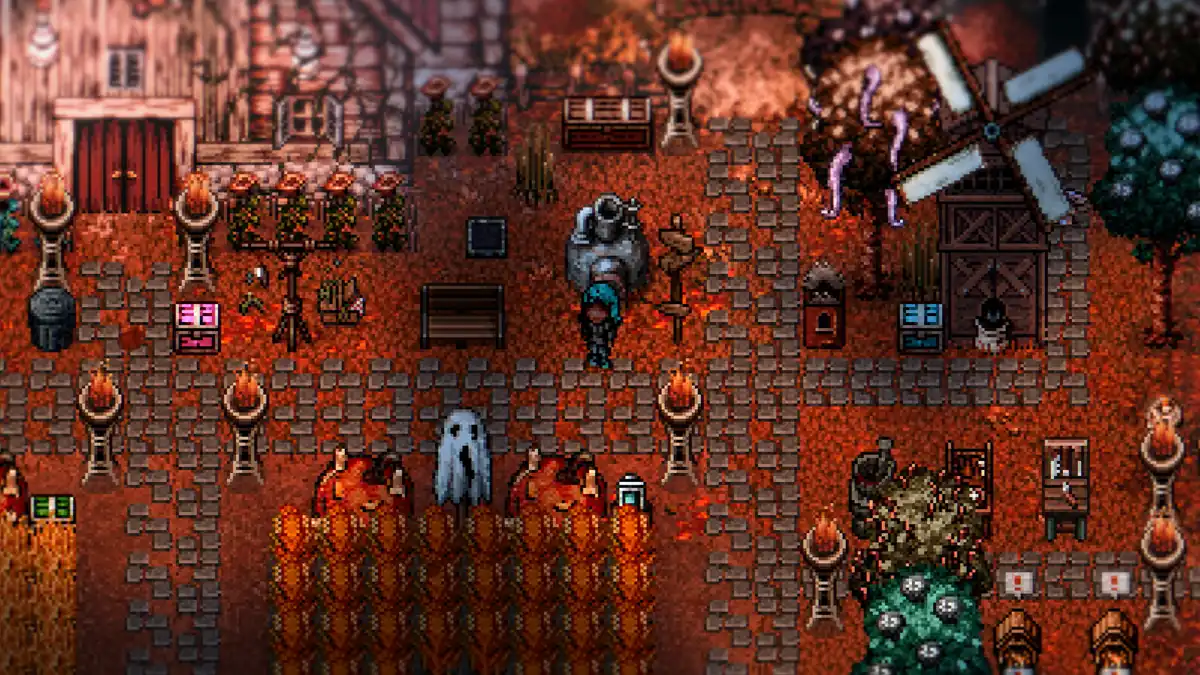
| Detail | Confirmed information | Planning consequence |
|---|---|---|
| Crop | Pumpkin | Check the seed name before planting; Pumpkin Muffin and Pumpkin Pie are finished foods, not seed items |
| Valid seasons | Summer and Autumn | Do not use real-world pumpkin advice or assume Spring planting works |
| Grow time | Eight days | Leave a verified eight-day window and water consistently |
| Seed seller | Old Man Crawford's farming shop | Return to the farm shop after the required task unlock |
| Shop unlock | Complete The Skull Chalice task | Missing stock is usually a progression check, not a random shop failure |
| Harvest use | Sell, process, cook, or retain for later needs | Decide the use before selling the full harvest |
The game may label its seasons with thematic names in some screens or community references. The captured seed data uses the standard Summer and Autumn icons, while search snippets also use names such as Season of Harvest and Season of Witch. Use the icon and the name shown in your current calendar rather than translating one old label into a new deadline. The important supported rule is the pair of valid adjacent seasons and the eight-day growth requirement.
Pumpkin Seeds are not guaranteed to appear in Crawford's opening stock. The recorded acquisition condition is completion of The Skull Chalice. If the shop does not list them, do not spend days sleeping in the hope of a random restock until you have checked that task. The Hans task and seed guide explains the farm progression that leads into expanded seed access.
Calculate a safe pumpkin planting window
A crop's listed grow time is not the same thing as a fully verified last-planting date. To calculate the window for the save in front of you, work from visible game information:
- Open the calendar and record the current season and day.
- Confirm the seed description still says eight days and shows Summer and Autumn.
- Count eight growth transitions that occur while the crop remains in an accepted season.
- Add a buffer if the first day, missed watering, festival travel, or a version-specific rollover is uncertain.
- Plant the expensive portion only after one test plot behaves as expected.
This guide intentionally does not publish a made-up day number such as “plant by the 20th.” That number would only be reliable if season length and day-counting behavior were confirmed for the same build. A mathematically neat deadline based on the wrong calendar is worse than a conditional answer because it can destroy an entire field.
The eight-day rule also does not promise that a crop grows while unwatered. Plan as though daily care matters unless the game itself shows otherwise. If a day will be consumed by the Mall, Catacombs, or a festival, water before leaving. The beginner tips guide has a broader morning route that puts farm care before long exploration.
Use a buffer instead of the absolute edge
A one- or two-day buffer has three advantages. It protects against a misunderstood planting-day count, leaves time to recover from one missed interaction, and gives you a chance to inspect the mature crop before a seasonal rollover. The buffer is a player-safety recommendation, not a hidden rule that changes the eight-day value.
When the calendar is close, compare the value of a late harvest with the cost of losing the seeds. Planting one row may be reasonable if you need evidence for the current build. Planting every seed is an unnecessary risk. Keep the remaining stack for the next valid season or for a task that asks for the item directly.
Prepare the field before using Pumpkin Seeds
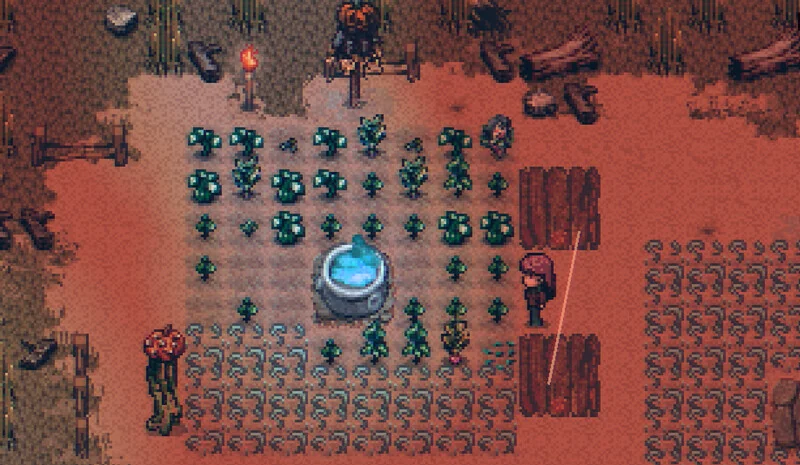
Pumpkins use the same basic farming sequence as other seed crops: prepare a usable tile, plant the seed, maintain the crop through its growth period, and harvest when the mature interaction becomes available. The exact animation is less important than confirming each tile changed to the expected planted state.
Lay out the field before buying a large batch. A compact plot reduces walking and makes missed tiles obvious. It also keeps the field within the range of any scarecrow protection you have placed. The Egg Hunt can award a Floral Scarecrow blueprint; the Egg Hunt festival guide explains the documented event and reward rather than treating the scarecrow as an automatic early-game item.
Use this planting checklist:
- Clear weeds and obstacles from the intended tiles.
- Till only the area you can water reliably.
- Put the Pumpkin Seeds in an accessible inventory slot.
- Plant one tile and verify the seed count falls by one.
- Finish the row without switching to a food or processed pumpkin item.
- Water every planted tile and look for the visual state change.
- Recheck the row before leaving the farm for the day.
The checklist sounds cautious because several inventory items share the word “pumpkin.” A Pumpkin, Pumpkin Seed, Pumpkin Pie, and Pumpkin Muffin have different roles. If the action does not plant, read the selected item name rather than assuming the plot is broken.
Keep pumpkins alive through the growth period
The useful daily routine is short: check the field, water any dry planted tile, inspect for crop loss, and keep the remaining days in mind. Do this before a long dungeon trip. Returning after midnight is too late to correct a missed interaction from the previous day.
Crows can threaten crops, and scarecrows reduce that risk within their working area. Captured item data describes the Floral Scarecrow as allowing one scarecrow per field and reducing the chance for crows to eat crops by 100 percent when the field is in range. Treat the placement indicator in the current build as the authority for actual coverage. A scarecrow placed decoratively outside the field is not useful protection merely because it is visible on screen.
Do not confuse crop disappearance with seasonal failure immediately. Check:
- whether only one tile is missing, which is consistent with a localized crop threat;
- whether the entire seasonal set changed after a calendar rollover;
- whether the plot was watered on the relevant days;
- whether the planted item really was Pumpkin Seed;
- whether a save was reloaded to a point before planting;
- whether the field itself was moved, reset, or affected by a story event.
Those observations narrow the cause without inventing a universal crop-death formula. Preserve a save before the season boundary if the harvest is valuable, then compare the before-and-after state.
Unlock Pumpkin Seeds at Crawford's shop

Old Man Crawford handles the farm's tool and seed shop. The captured item record ties Pumpkin Seed stock to completing The Skull Chalice. A common mistake is to check the shop, see no pumpkin entry, and interpret the absence as the wrong season. Season controls planting; the task controls this recorded shop unlock.
Use the journal to separate four states:
- The Skull Chalice has not been offered.
- The task is active but its objective is incomplete.
- The objective is complete, but the reward conversation has not been finished.
- The task is marked complete and Crawford's stock can be checked again.
If the journal is in state three, return to the named quest giver before waiting for a new day. Many Elderfield unlocks happen at the hand-in conversation, not at the instant the final item enters the inventory. The same distinction appears throughout farm progression: completing an action and collecting the unlock are separate steps.
Price data in captured community tables is inconsistent, so this page does not promise one seed price. Read Crawford's current shop listing before deciding field size. Multiply the displayed unit price by the number of tiles you can maintain, then retain enough gold for tools, food, or task items. This avoids turning an outdated price row into bad financial advice.
Harvest pumpkins and decide what to keep
Harvest only when the crop displays its mature state and the normal interaction removes the finished Pumpkin rather than the seed. After the first harvest, compare the inventory increase with the number of mature tiles. This catches a missed tile before you leave the field.
Captured item data supports several pumpkin uses:
- Pumpkins can be sold as crops.
- A Pumpkin can be processed in a Preserving Barrel.
- Pumpkin Pie and Pumpkin Muffin are separate cooked foods.
- Pumpkins can produce Pumpkin Vine as loot or an associated material.
- Pumpkin-related food may also appear as event or combat loot, which does not mean the recipe is automatically learned.
Do not sell every normal-quality Pumpkin on the first harvest. Keep at least a small reserve until current tasks, recipes, processing stations, and gift plans have been checked. The Welcome to Elderfield gift guide also explains why old preference lists should not be treated as a guarantee before giving away a scarce crop.
Quality affects sale value in captured tables, but this guide does not promise exact prices across versions. Inspect the item stack in the current build. If the goal is cooking or a task, confirm whether quality matters before using the highest-quality crop. If the recipe accepts any quality, the more valuable crop may be better reserved for sale.
Separate the crop from pumpkin foods
Pumpkin Pie restores HP according to the captured item record; Pumpkin Muffin restores both HP and MP. Neither item replaces a raw Pumpkin when a task or processor asks for the crop. Conversely, carrying raw produce into combat does not give it the documented recovery of the finished recipe unless its own description says so.
This distinction matters because recipe unlock, ingredient ownership, and cooked output are three separate states. Seeing Pumpkin Muffin in a community table does not put it in the kitchen menu. Confirm the recipe is learned, gather the listed ingredients, and use the correct cooking station.
Troubleshoot pumpkins that do not grow or harvest
| Symptom | Most useful check | Safe response |
|---|---|---|
| Pumpkin Seeds absent from shop | The Skull Chalice completion and reward hand-in | Finish the task and revisit Crawford |
| Seed cannot be planted | Current season, selected item, prepared tile | Confirm Summer/Autumn icon and till the tile |
| Crop looks unchanged | Watering state and elapsed day transitions | Water, record the day, and compare after rollover |
| Crop disappears | Season boundary, crow protection, save state | Review the calendar and field coverage before replanting |
| Harvest interaction fails | Maturity state and active tool/item | Wait for the mature state and clear the active selection |
| Expected recipe is absent | Recipe unlock versus ingredient ownership | Find the recipe source; owning Pumpkin is insufficient |
| Profit differs from a guide | Current item quality and build version | Use the in-game sale value instead of an old table |
When evidence is unclear, run the smallest test that answers the question. One seed can confirm the current planting-day count. One protected and one unprotected tile can reveal a field-coverage issue. One harvested Pumpkin can confirm the inventory and sale description. Small tests preserve the rest of the seed stack and produce evidence tied to the installed build.
The confirmed core remains simple: Pumpkin Seeds unlock through The Skull Chalice, grow in Summer and Autumn, and take eight days. Everything about the final safe date must be calculated from the visible calendar and current crop behavior, not guessed from real-world gardening advice or an unsupported season length.
Keep a compact pumpkin record for the next season
Write down the planting day, season icon, watering days, first mature day, number planted, and number harvested. That small record answers the deadline question for the installed build more reliably than a calendar copied from an older guide. It also reveals whether the loss was field-wide or limited to one tile. Keep the result descriptive: “planted after watering on day X and harvested on day Y” is stronger evidence than “it took about a week.” If an update changes the behavior, repeat the one-seed test before committing the next large field. This takes little time and protects both the seed budget and the next eight-day window.
Editorial verification
This guide was source-checked on . Confirmed game details, community observations, older-build behavior, and unresolved evidence gaps are identified in the article instead of being presented as equally certain.
Found an outdated step or a version mismatch? Send a correction to Kevin.