
Locate the Door Mimic and use Insight
Door Mimics are doorway enemies in the Old Woods Mines and the Catacombs mine. The Old Woods location is listed as Mine F2. Both documented combat variants have an Insight weakness of 125%, with no listed elemental resistance or immunity.
The two variants differ substantially in HP, offensive stats, defenses, and Agility. The location listing does not reliably assign each extracted stat set to a particular doorway. Use the two tables as variant references, rather than treating the stronger set as a confirmed enemy at a specific floor.
Identify the doorway enemy
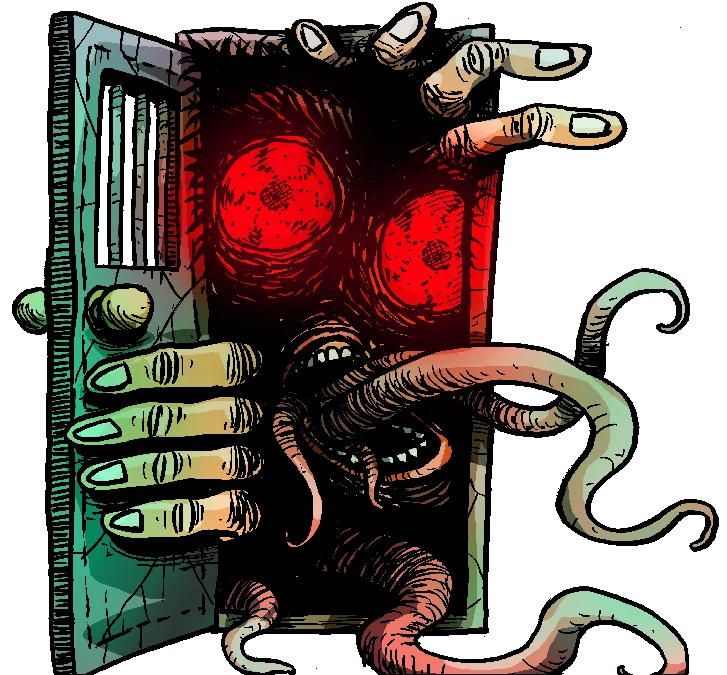
The mimic is fought at doorways rather than appearing as an ordinary item container. For region access and the surrounding objectives, use the Old Woods guide or the Catacombs route. Those routes handle progression to the relevant areas; this page covers the enemy once you reach its doorway.
The confirmed locations are the Old Woods Mines' second floor and the Catacombs mine. There is no verified list here of every doorway, a visual tell that distinguishes every safe door, or a universal respawn schedule. Do not assume that every door in either region produces the same fight or reward.
Compare the two variants on your difficulty
The labels Variant A and Variant B below distinguish the two recorded stat sets. They are reference labels for these tables, not confirmed in-game names or a location assignment.
Stats are shown before temporary battle buffs and debuffs. ATK is Attack, DEF is Defense, MAT is Magic Attack, MDF is Magic Defense, AGI is Agility, and LUK is Luck.
Variant A
| Difficulty | HP | MP | ATK | DEF | MAT | MDF | AGI | LUK | EXP | Gold |
|---|---|---|---|---|---|---|---|---|---|---|
| Cozy | 150 | 5,000 | 12 | 17 | 14 | 18 | 13 | 20 | 200 | 0 |
| Easy | 225 | 7,499 | 18 | 26 | 21 | 27 | 19 | 30 | 150 | 0 |
| Normal | 300 | 9,999 | 24 | 34 | 28 | 36 | 25 | 40 | 100 | 0 |
| Hard | 360 | 9,999 | 29 | 41 | 34 | 43 | 30 | 48 | 100 | 0 |
| Nightmare | 420 | 9,999 | 34 | 48 | 39 | 50 | 35 | 56 | 100 | 0 |
Variant B
| Difficulty | HP | MP | ATK | DEF | MAT | MDF | AGI | LUK | EXP | Gold |
|---|---|---|---|---|---|---|---|---|---|---|
| Cozy | 200 | 5,000 | 20 | 23 | 20 | 23 | 38 | 20 | 200 | 0 |
| Easy | 300 | 7,499 | 30 | 35 | 30 | 35 | 56 | 30 | 150 | 0 |
| Normal | 400 | 9,999 | 40 | 46 | 40 | 46 | 75 | 40 | 100 | 0 |
| Hard | 480 | 9,999 | 48 | 55 | 48 | 55 | 90 | 48 | 100 | 0 |
| Nightmare | 560 | 9,999 | 56 | 64 | 56 | 64 | 105 | 56 | 100 | 0 |
On Normal, Variant B has 400 HP rather than 300, 40 ATK rather than 24, and 75 AGI rather than 25. Its higher Agility is especially noticeable in the comparison, but it should not be translated into an invented fixed number of extra turns.
The EXP values also depend on difficulty: both sets give 200 on Cozy, 150 on Easy, and 100 on Normal, Hard, or Nightmare. Ordinary gold is zero throughout the listed tables. These reward numbers are separate from the question of encounter-specific items.
Exploit the confirmed elemental weakness
Both variants list Insight at 125%. This is an elemental rate, meaning applicable Insight damage receives a 1.25 multiplier at that stage of the calculation. It does not promise that any Insight action will deal 25% more final damage than a different action with another formula, power, or damage type.
Neither variant lists elemental resistance or immunity. That does not make every attack equivalent: your action's damage formula and the mimic's Defense or Magic Defense still matter. The combat guide covers those general systems without requiring a separate beginner battle walkthrough here.
The enemy's attack elements include Insanity, the Normal attack element, and Darkness. Those describe its own moves; they are not its defensive weaknesses. Selecting Darkness merely because Dark Blast uses that element is not the same as exploiting the listed Insight weakness.
No specific weapon level, mandatory ritual, or minimum player level is confirmed for these encounters. Use the known enemy stats and your available Insight options rather than relying on a fabricated guaranteed winning setup.
Recognize the six moves
Both variants use the same recorded move set. The percentages below describe weighted selection under normal conditions. They do not form a guaranteed repeating sequence, and they are not the chance that a listed status will successfully apply.
| Move | Normal selection weight | Relevant effect |
|---|---|---|
| Frenzy Slash | 25% | Insanity skill; triple attack on a random enemy; can critically hit |
| Attack | 25% | Normal physical attack; can critically hit |
| Evil Eye | About 8.3% | Applies Hex and Chaos, each listed at 100% base chance |
| Cosmic Premonition | About 8.3% | Applies Sickness and Weakness, each listed at 100% base chance |
| Dizzy Glare | About 8.3% | Damaging ritual that can critically hit and applies one-turn Dizziness |
| Dark Blast | 25% | Darkness ritual dealing HP damage; can critically hit |
Frenzy Slash is the multi-hit move in this set. The three attacks belong to that selected action. The move list does not say the mimic always uses it on a particular turn or follows it with a particular ritual.
Evil Eye and Cosmic Premonition have no listed damage element. Their importance is the status package: Hex and Chaos for one, Sickness and Weakness for the other. A 100% base application chance is distinct from final success after relevant state rates and Luck interactions.
Dizzy Glare is recorded as using the Normal attack element. Its Dizziness lasts one turn, and the associated attack-failure behavior is influenced by Luck. The listed “+50% Attack Fail Rate” description should not be treated as an unconditional 50% outcome in every Luck tier. The Luck mechanics page explains why Dizzy checks differ from status application.
Dark Blast is a damaging Darkness ritual, while Attack is a physical skill. The mimic can therefore threaten both physical and magical defenses. Its move table alone does not establish that a single defense stat or one status cure makes the encounter harmless.
Distinguish status susceptibility from a guaranteed disable
Both variants list normal state rates, normal debuff rates, and no state immunity. This establishes that the table does not give the mimic a special immunity to those effects. It does not make a low-chance status action automatically succeed.
Both variants also list Hit rate +95% and Evasion −1000% as innate traits. These trait entries are separate from move-selection weights, elemental rates, and status susceptibility; they do not establish a guarantee that every action in the battle hits.
State application still has its own chance and any relevant Luck comparison. A strategy built around a particular disable needs that action's actual effect and application rules; the absence of immunity is only one part of the calculation.
Similarly, the elemental table's lack of immunity does not remove the enemy's HP or defenses. Read each table for the system it describes: elemental rates, state rates, and numerical combat stats answer different questions.
Interpret EXP, gold, and item rewards separately
Neither recorded Door Mimic variant is assigned a standard corpse-loot table. Ordinary EXP and gold are still specified: EXP varies with difficulty, while ordinary gold is zero. A missing standard corpse table does not mean a battle cannot have a fixed encounter prize.
Named fights and mimics can use encounter-specific rewards. Those belong to the particular encounter rather than every enemy of the same species. There is no confirmed universal Door Mimic item drop, quantity, or repeatable farming reward in the available record.
Do not apply the ordinary 50% corpse-search rule as though it guarantees a random item table for this enemy. The corpse loot page separates ordinary searches, fixed prizes, and the still-unconfirmed exact message trigger. That distinction explains why a fight can award EXP without displaying the ordinary item-search process.
For a specific doorway, the outstanding facts are the exact variant assignment and any fixed prize attached to that encounter. The confirmed information is sufficient to identify the enemy family, compare its difficulty-scaled stats, and use its Insight weakness, but not to promise a particular chest substitute or farmable item after every victory.
Editorial verification
This guide was source-checked on . Confirmed game details, community observations, older-build behavior, and unresolved evidence gaps are identified in the article instead of being presented as equally certain.
Found an outdated step or a version mismatch? Send a correction to Kevin.